
Many UK homeowners are currently upgrading their conservatories to an insulated conservatory roof. The reason for this is to make those spaces more comfortable, energy-efficient, and usable year-round.
Compared to older glass or polycarbonate roofs, insulated conservatory roof systems help stabilise indoor temperatures, reduce outside noise, and make the entire space feel like a natural part of the home.
In this blog, we will explore why insulated roof replacement has become a positive trend in the UK and discuss whether you should follow suit. .
What Is an Insulated Conservatory Roof System?
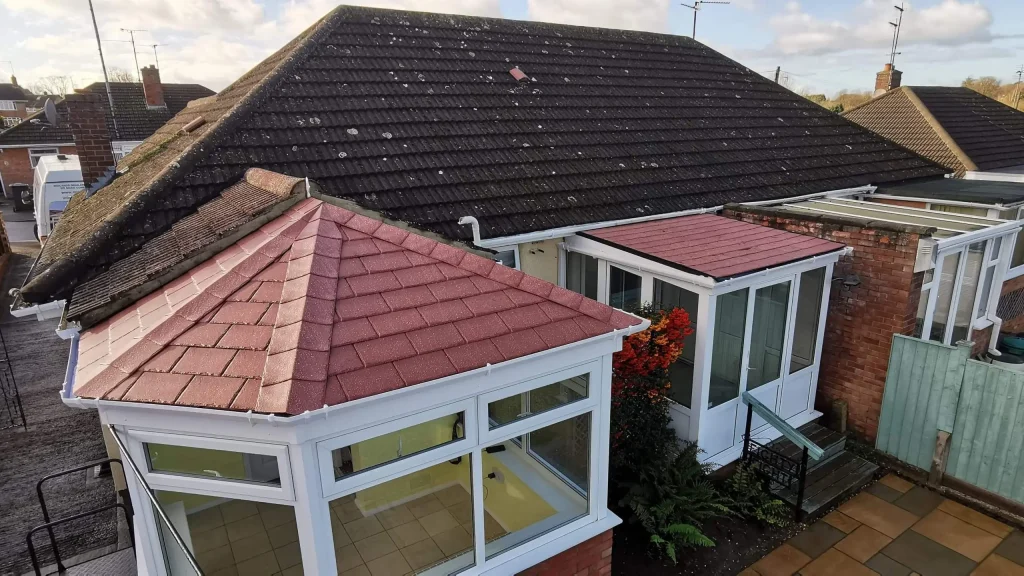
An insulated conservatory roof system improves temperature control, comfort, and energy efficiency inside a conservatory. Instead of thin polycarbonate sheets or simple glazing, these systems use multilayer materials, which reduce heat transfer and improve overall performance.
Most insulated conservatory roofs have:
- A membrane and tiles (that match your house)
- High‑performance insulation
- Plasterboard & skim or UPVC‑clad inside finish
Some systems also use fire-grade frameworks to keep the structure strong without adding extra weight.
Why Are Insulated Conservatory Roofs Becoming Popular in the UK?
Over the past few years, the demand for insulated conservatory roof systems has increased across the UK.
There is one major reason why this is happening now. Before October, 2010, strict UK Building Regulations required conservatory roofs to be at least 75% translucent to remain exempt from standard building controls.
Technically speaking, someone could have installed an insulated solid conservatory roof earlier, but they might have to jump through many legal hoops and may also lose their building regulation exemption. It would reclassify their structure as a full home extension, but not now.
These are also the following factors behind this popularity:
- Growing trend of working from home
- Demand for living space that can be used all year round
- Increased awareness of thermal performance
- Greater general emphasis on energy efficiency
Many conventional conservatories are used as seasonal rooms. Because glass or polycarbonate roofs are good conductors of heat, they create the greenhouse effect. Meaning: the space gets very hot during summer and extremely cold during winter.
As more people came to understand how replacing the insulation would benefit them, they embraced the idea of avoiding full extensions and using the space as a functional room.
How Do Insulated Roofs Work?
A system typically consists of:
- Exterior tiles or solid panels
- Waterproof membrane
- Ventilation gap for air movement
- Treated battens
- Super quilt insulation
- Plasterboard (vapour-board)
- Plaster multi-finish
- Ship-lap cladding
- Skylight
Together, these let us build a system in which much of the solar energy is reflected, condensation issues are eliminated, and external noise is reduced by up to 90%. This means you save significantly on heating and air conditioning, your carpets or furniture are not destroyed by UV exposure, there is no glare on your Laptop or TV, and you are comfortable during winter and summer.
How Insulated Roofs Improve Energy Efficiency and Comfort
One of the biggest benefits of conservatory roof insulation is improved comfort. A well-insulated roof helps keep indoor temperatures stable throughout the year.
The system allows very little heat to escape in winter, reducing pressure on the heating system. Direct heat from the sun is also controlled during summer. As a result, the environment is more comfortable.
Noise reduction is also a big advantage. The sound of rain on polycarbonate roofs can be deafening and disruptive to living. The insulated system significantly dampens noise and keeps the indoor environment quiet.
Other benefits that homeowners note are:
- Reduces glare from direct sunlight
- Condensation is reduced
- Improves indoor air quality
- Furniture and flooring are well protected
Although savings can vary from home to home, many benefit from lower energy use in the long run.
Who Should Consider Upgrading Their Conservatory?
If your conservatory space is usable only at certain times of the year, an insulated conservatory roof can be quite beneficial.
Many families opt for replacement roofs to create additional usable space. Conservatories that were previously unusable in winter or summer are now being converted into dining rooms, playrooms, or second lounges.
For those who work from home, it also creates a quieter and more controlled temperature environment.
Many people upgrade conservatories before selling a home, as modern insulated spaces are generally more attractive to buyers.
Conservatories with old panels, leaks, excess condensation, or noise problems are also suitable for an upgrade.
In most cases, you don’t even need planning permission.
Cost Considerations and Typical Installation Timeline
The cost of an insulated conservatory roof depends on several things:
- Roof size and design
- Type of tile
- Interior ceiling finish
- Lighting or ventilation upgrades
- Additional structural support (if required)
Most installations are completed within 3-5 days, although smaller projects can be completed in less time.
Tasks usually include:
- Removal of the old roof
- Installing the insulation layer
- Applying internal finish, lights, etc.
- Installing a waterproof membrane externally
- Laying tiles that suit your property
Before starting work, professional installers like Midlands Insulated Conservatory conduct a thorough survey and discuss in detail which materials you want to use and their pricing.
Frequently Asked Questions
1. Is planning permission required for an insulated conservatory roof?
In many cases, it doesn’t. However, Building Regulations approval may be required based on the type of property and roof replacement.
2. How long does an insulated conservatory roof last?
Modern systems can last for decades and beyond. That’s why it is important to hire the right professionals and do it right the first time.
3. Can the previous conservatory frame be kept?
In many cases, it is possible to use existing structures. When the roof installers survey your old roof, they will check whether the old frame can hold the new roof.
4. Can the inner ceiling be customised?
Yes. Many opt for plastered ceilings, integrated lighting, or uPVC finishes to match the whole house.